Growing Blueberries in Containers: An Easy Backyard Project
You don't need land. You don't need a farm. You don't need to quit your job and move somewhere more rural to start living a slower, more intentional life. Growing blueberries in containers is proof of that — all it takes is a pot, a patio, and about 30 minutes to set up something that will pull your kids outside every single day.
This is one of the easiest, most rewarding entry points into backyard homesteading, and I want to walk you through exactly how we did it: which blueberry variety to choose, why the soil matters more than almost anything else, and how this one small project became something much bigger for our family.
I made a full video walking through the whole process — watch it below, then keep reading for the step-by-step and the products we used.
This post contains affiliate links. If you purchase through one of these links, I may earn a small commission at no additional cost to you. I only recommend products we actually use and trust.
Why Containers Are the Easiest Way to Start
If you're picturing raised beds, tilled soil, and a weekend of hard labor, container gardening is the opposite of that. Growing blueberries in containers is actually easier than planting them in the ground, mainly because it gives you full control over the one thing blueberries care about most: soil acidity.
It's a low-commitment way to test whether a slower, more hands-in-the-dirt lifestyle is something you actually enjoy — before you invest in a bigger garden or more land. And if you have kids, this is a project they'll notice immediately. Ours check the bushes on their way out the door every morning.
Choosing the Right Blueberry Variety

Not every blueberry bush is built for a pot. Look for varieties labeled specifically for container gardening — most reputable growers will note this right on the plant tag. We picked up a Peach Sorbet blueberry bush (a Bloomin' Bushel Blueberry Bush variety) from our local nursery, and it's been a great choice for a patio setup.
A few tips if you're shopping:
Buying online is often cheaper than local nurseries, especially for smaller starter plants
Smaller plants catch up fast, so don't be afraid to size down to save money
Container-specific varieties are usually noted on the plant label — ask if you don't see it
Want the shortlist? I put together a free two-page guide with the exact varieties that do well in containers so you don't have to guess. Grab the free guide here.
Why Blueberries Need Acidic Soil (and What Happens If You Skip It)
This is the part most people miss, and it's the difference between a thriving bush and one that never produces a single berry.
Blueberries need acidic soil to actually pull nutrients up from the ground into their roots. In more alkaline soil, those nutrients bind up and the plant can't access them — even if the nutrients are technically there. We learned this the hard way with blueberry bushes we planted directly in our garden without amending the soil first. They didn't thrive. They barely leafed out, and they never produced fruit.
The tell-tale sign is a condition called chlorosis — the leaves turn yellow because the plant can't pull up what it needs. If your in-ground or potted blueberries have pale, yellowing leaves and little to no fruit, acidic soil is the first thing to check.
How to Test Your Soil
You have two easy options:
A basic pH test kit
A pH meter you stick directly into the soil
We've used both. Shop the pH test kit | Shop the pH meter
Building the Right Potting Mix

Getting the soil right in a container is genuinely simple. You have two paths:
Buy acidic potting soil directly — many camellia and azalea mixes are already formulated for acid-loving plants.
Make regular potting soil acidic — this is what we did.
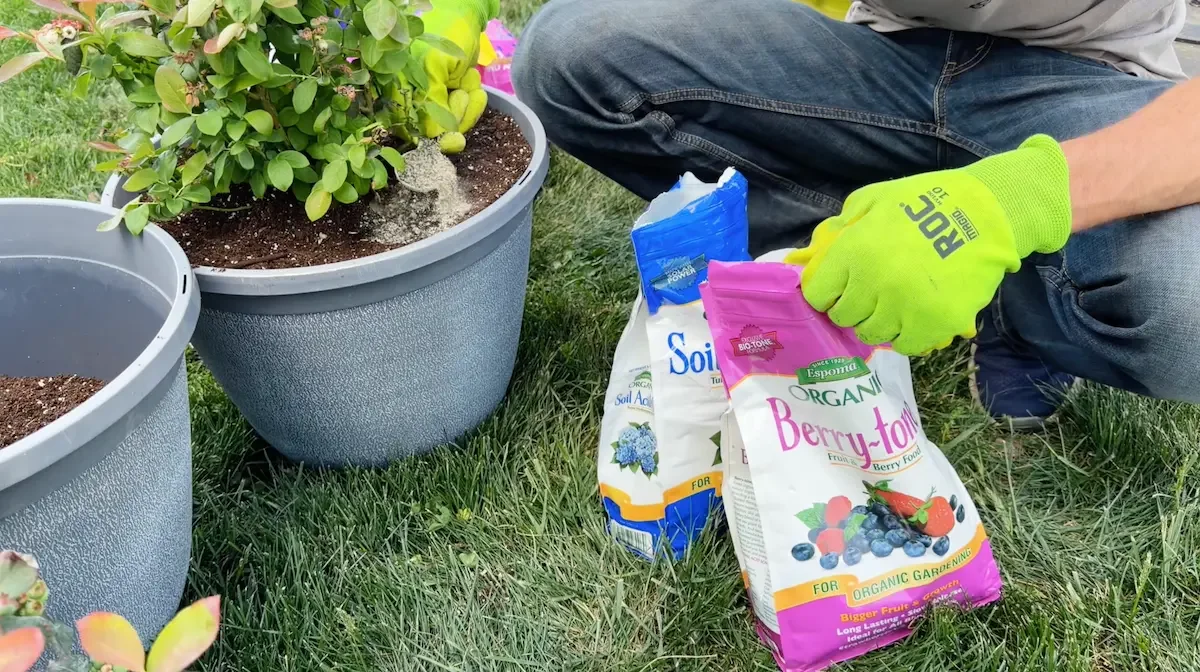
We used Coast of Maine potting soil, a high-quality, loose mix, and amended it with a soil acidifier and Berry Tone fertilizer, which adds nutrients and a bit of acidifying power on its own. Because Berry Tone already acidifies somewhat, we reduced the amount of straight acidifier we mixed in to avoid overdoing it. If I’m being honest, I believe I should have bought the acidic soil online, such as Coast of Maine Acid-Loving Plants Soil, and waited for that to be delivered, so I would recommend that if possible.
The process: layer in soil, mix in a bit of acidifier, add more soil, mix in more acidifier, place the plant, then top with soil and a final layer of Berry Tone and acidifier worked in around the base. Always follow the specific product instructions on your bag — acidifier concentration varies by brand.
Watering: What to Watch For
Containers dry out faster than in-ground beds, so consistency matters more here. The good news: it's an easy, almost meditative habit to build into your evening.
The test is simple — stick your finger about an inch into the soil (up to your first knuckle). If it feels moist, skip watering. If it's dry, it's time. During heat waves, check daily.
The Bigger Reason We Grow Our Own Berries
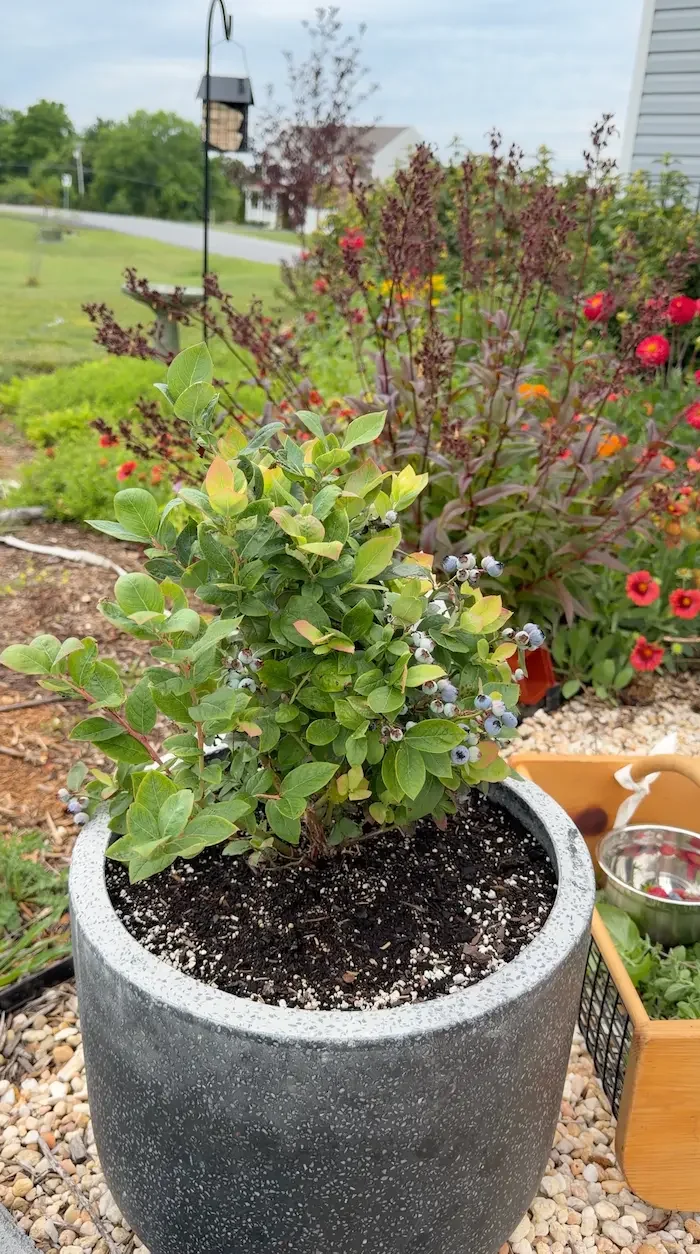
By mid-June, our toddlers were coming out to the patio and picking ripe blueberries straight off the bush — green ones included, which is its own ongoing lesson in patience. Between the blueberry bushes and a new raspberry patch, our kids have a reason to be outside that has nothing to do with a screen.
I didn't grow up in a family that grew our own food. This project actually traces back to my grandfather, who grew up in old coal mining towns in Pennsylvania and told stories of picking wild blueberries and raspberries in the mountains as a kid, then bringing them home for his mother to bake into pies. My kids aren't going to roam mountains unsupervised — that's not realistic or safe today — but I wanted to bring a small piece of that same experience into our own backyard.
This project teaches our kids about the seasons, the ecosystem, and where food actually comes from — all through direct, hands-on experience. And it gives them a backyard that can genuinely compete with a screen, which matters to me both as a parent and as someone working on my own phone habits.
Try It Yourself
If you've been looking for a low-cost, low-commitment way to start living a little slower and get your kids outside more, this is it. Grab a pot, a bag of the right soil, and a container-friendly blueberry variety, and you'll have this set up in one afternoon.
Grab the free container blueberry guide for the exact varieties and setup steps, and watch for our raspberry setup video coming soon — subscribe so you don't miss it.
What are you doing to get your kids outside and off screens? I'd love to hear in the comments.
Affiliate Disclosure: Some of the links in this post are affiliate links, meaning I may earn a small commission if you make a purchase through them, at no additional cost to you. I only share products I personally use and trust. Thank you for supporting My Slow Edit.
